"Populist" has been used for left-wing Latin American presidents, right-wing European challengers, and both ends of American politics at once. Hence two standing criticisms the course opens with: it is a battle term, hurled to denounce opponents rather than describe them, and it seems too vague, stretched over everything. Almost nobody calls themselves a populist; the label is ascribed, usually as an insult, even to figures like Perón. Some scholars doubted the thing existed at all.
The literature tried several angles before settling: populism as democratic popular agency (US historians), as the very essence of politics and an emancipatory force (Laclau), as irresponsible economics (spend, inflate, crash), as a strategy of charismatic leaders seeking direct unmediated support, as a folkloric style of rule-breaking behavior. Each catches a case and misses others. The course's answer, and the exam's, is the ideational approach.
Mudde and Rovira Kaltwasser's definition, worth memorizing to the comma: populism is a thin-centered ideology that considers society to be ultimately separated into two homogeneous and antagonistic camps, "the pure people" versus "the corrupt elite", and argues that politics should be an expression of the general will of the people.
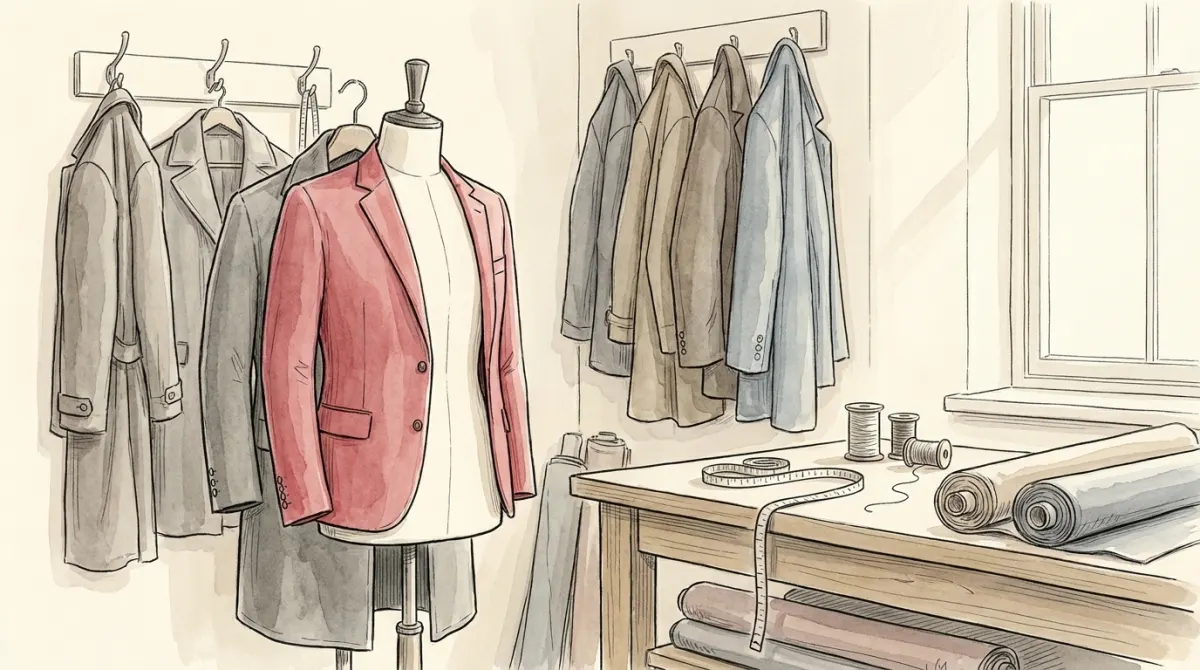
The load-bearing phrase is thin-centered. Thick ideologies (liberalism, socialism, fascism) carry full wardrobes: answers about the economy, foreign policy, the family, everything. Populism is a thin jacket: one dramatic claim about people versus elite, and nothing underneath. It cannot answer complex political questions alone, so it is always worn over a host ideology, and that explains the puzzle from section 1: populism looks wildly different in different places because the coat under the jacket differs, not the jacket.
"The people" is a construction, an "empty signifier" (Laclau) that gains power precisely by being fillable. Three fillings, usually blended: the people as sovereign (the ultimate source of power: "give government back to the people"), as the common people (class plus culture: the dignity of ordinary folk, Perón's descamisados), and as the nation (civic or ethnic). Real blends from the slides: Trump's "forgotten men and women" (all three at once), Milei's "la gente de bien" against "la casta", Orbán's ethnically defined Hungarians against Brussels, Morales' indigenous majority, Bukele's ordinary Salvadorans against the old parties. The notion is integrative and divisive: it unites an angry majority by defining an enemy.
The dividing line is moral, not sociological: pure people, corrupt elite. "The elite" bundles political establishment, economic, cultural and media elites into one homogeneous corrupt bloc, from which populists conveniently exclude themselves. The tricky exam question answers itself here: can populists stay populist in power? Yes: they redefine the elite as shadowy forces still thwarting the people (deep state, foreign capital, Soros, Brussels), the "paranoid style" of politics. The Tea Party's latte-drinking coastal liberals, Bolsonaro's media-judges-professors axis: the elite is whoever the story needs.
From Rousseau: the volonté générale, the community's common interest, opposed to the mere sum of particular wills. Populists assume the general will exists, is unitary, and that the leader can channel it. Consequences: contempt for representative mediation (elections as "aristocratic"), preference for direct democracy (referendums, plebiscites), and the dark side: whoever disagrees is not part of the people, so silencing them serves democracy. The slides' cases: constituent assemblies in Venezuela, Ecuador and Bolivia; Brexit's "will of the people" wielded against every doubt; Bukele's state of emergency "because the people want it"; Meloni's premierato framed as returning power to the people; Milei claiming mandates from social media polls.
The ideational approach's superpower is explaining malleability. Pick a host coat; the jacket does the rest:
One more advantage the course lists: the ideational approach handles demand as well as supply: not just what leaders do, but why citizens hold populist attitudes and buy the message, and it fits every organizational form, from loose movements (Tea Party, 15-M) to structured parties (FPÖ, Syriza) to personalist vehicles (Chávez, Trump). What all populists share, per the slides: a carefully crafted image of the vox populi, the leader as the people's voice made flesh.
Three look-alike pairs, all of them MCQ bait:
| Populism | Elitism | Pluralism | |
|---|---|---|---|
| Society is | two homogeneous camps | two homogeneous camps | many overlapping groups |
| The good side | the pure people | the superior elite | no group is inherently good |
| Democracy | direct, expressing the general will | rejected or limited (Franco, Pinochet) | power-sharing, compromise, consensus |
Elitism is populism's mirror: same dualist map, virtue flipped to the top. Pluralism is the true opposite of both: society as many legitimate, overlapping groups, none inherently pure or corrupt, with diversity as strength (recall Poli-09's marketplace: pluralism is its official philosophy).
And the pair the exam loves most: populism vs clientelism. Clientelism is a mode of exchange: goods, jobs, and favors traded for political support. It is a strategy, not an ideology; many populists use it, many non-populists do too (Mexico's PRI ran clientelism for decades without being especially populist, while Peronism blended both). No inherent affinity, and neither concept maps onto left or right.
The course refuses the easy verdict: populism's relationship with liberal democracy is ambivalent, and the exam wants both hands.
Social media is the catalyst (Poli-10's fourth age doing ideology): platforms let populists bypass gatekeepers, who are themselves cast as elite, and build the direct leader-people connection the doctrine demands. Bolsonaro's WhatsApp campaign, Bukele governing by tweet, Milei's YouTube-to-presidency arc with a chainsaw as viral prop. Populist communication thrives exactly where institutional trust is low and social media use is high, which is Poli-13's cue.
The recognition reflex: is the jacket on?
| Definition (Mudde & RK) | thin-centered ideology: society split into two homogeneous, antagonistic camps, pure people vs corrupt elite; politics should express the general will |
| Thin vs thick | thin = must attach to a host ideology (hence malleability); thick = complete worldviews (liberalism, socialism, fascism) |
| The people (3 meanings) | sovereign · common people · nation; an "empty signifier", integrative AND divisive |
| The elite | a MORAL category; redefined in power (shadowy forces, paranoid style); populists self-exclude |
| General will | Rousseau's volonté générale; direct democracy preference; dark side: dissenters exit "the people" |
| Combinations | +nativism/authoritarianism = right-wing (Le Pen, Orbán, Trump) · +socialism = left-wing (Chávez, Podemos, Syriza) · +neoliberalism (Fujimori, Menem, Milei) · +nationalism/personalism = authoritarian populism (Bukele, Bolsonaro, Duterte) |
| Opposites | elitism (mirror image) and pluralism (opposite of both); clientelism = exchange strategy, NOT an ideology |
| Democracy verdict | corrective (voice, re-politicization, responsiveness) AND threat (anti-pluralism, attacks on checks and balances) |
| Social media | bypasses elite gatekeepers, enables direct leader-people connection; thrives on low trust + high platform use |
One thin jacket, many coats, always the same three words stitched inside: people, elite, will.
Six questions in the written test's style.